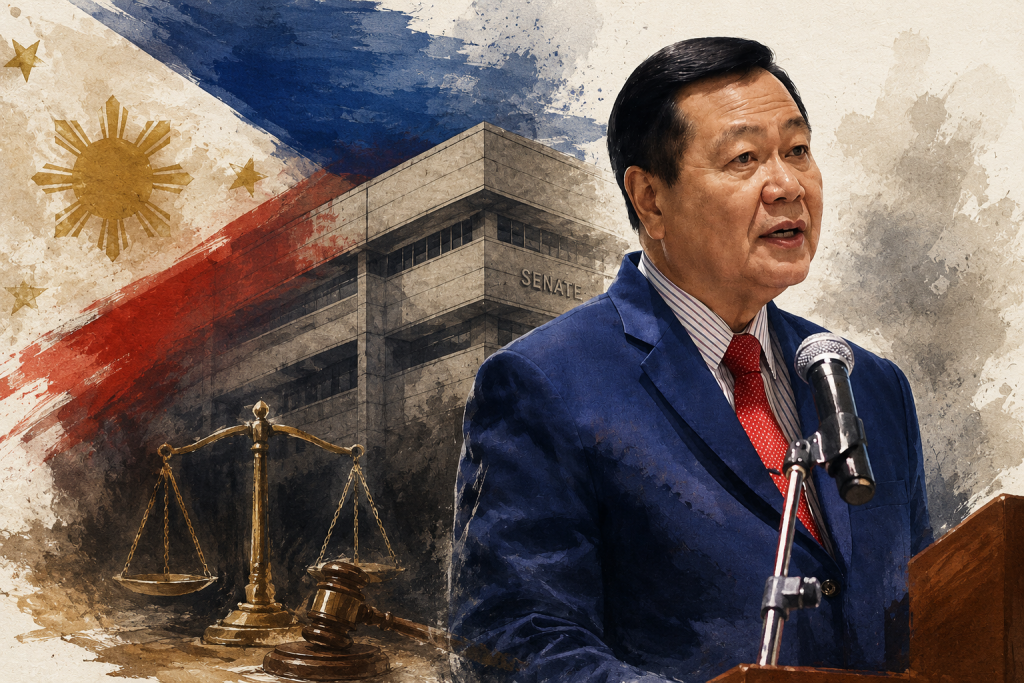
Retired Supreme Court Senior Associate Justice Antonio Carpio has reiterated that the Senate cannot simply dismiss the impeachment case against Vice President Sara Duterte without first conducting a trial, stressing that the Constitution requires impeachment proceedings to move forward once the Articles of Impeachment have been transmitted.
Speaking during a forum and in subsequent interviews, Carpio said motions filed by the defense must be addressed within the impeachment process itself and cannot be used to bypass the constitutional requirement for a trial.
According to Carpio, the Constitution provides that when an impeachment case reaches the Senate, the chamber must convene as an impeachment court and proceed with the trial. Any decision on motions raised by either side would initially fall to the presiding officer, although senator-judges may challenge such rulings and put the matter to a vote.
Carpio warned against attempts to terminate the proceedings outright before evidence is presented, arguing that the Senate’s constitutional duty is to hear and decide the case through the impeachment process.
Voting Threshold Debate
Carpio also addressed questions regarding the number of votes required for conviction.
While the Constitution requires a two-thirds vote of the Senate for conviction, he argued that the computation should be based only on senators who are legally qualified to participate in the proceedings.
Specifically, Carpio maintained that suspended Senator Jinggoy Estrada should not be counted among the senator-judges for purposes of determining the voting threshold. He cited Supreme Court rulings and provisions of the Plunder Law, arguing that a senator who is under suspension and unable to exercise the functions of office should not be included in the count of members qualified to vote.
“If you cannot hold office, you cannot vote,” Carpio said.
Under this interpretation, the number of votes necessary to convict would depend on the number of senator-judges legally eligible to participate in the impeachment trial.
Carpio noted, however, that Senator Ronald dela Rosa remains a qualified member because he has neither been suspended nor removed from office.
Impartiality Over Politics
The former magistrate urged senator-judges to set aside political loyalties and focus on the evidence presented during the proceedings.
He emphasized that the impeachment case involves one of the highest-ranking officials in government and should be decided on constitutional and legal grounds rather than partisan considerations.
“This case is very important, involving the second highest official of the land, and it should be treated with impartiality,” Carpio said.
Constitutional Process
Carpio’s remarks come amid continuing debate over the Senate’s role in the impeachment proceedings and questions surrounding the required number of votes for conviction.
He maintained that the impeachment process is ultimately governed by constitutional mandates, and that the Senate’s responsibility is to conduct the trial and render judgment based on the evidence and the law.